


$17.95

The word "tea" covers two quite different things. True tea comes from the leaves of one plant, Camellia sinensis. Herbal tea — properly a tisane — is an infusion of anything else: leaf, flower, root, bark or seed. Which one you are holding decides whether your cup contains caffeine, which compounds you are actually extracting, and how it should be brewed. Our tea collection covers both, spanning organic loose leaf and pyramid teas, Australian native botanical blends and traditional herbal formulas.
White, green, oolong and black tea are not different plants. They are the same leaf, handled differently, and the variable is oxidation — the enzymatic browning that begins the moment a leaf is bruised or torn. White tea is the least processed: simply withered and dried, with no heat step to arrest the enzymes, so it oxidises lightly of its own accord. For green tea, the leaf is steamed or pan-fired within hours, which denatures those enzymes and holds the leaf in its fresh state — this is why green tea retains its catechins, particularly EGCG, and why it tastes grassy rather than malty. Oolong is halted partway through. Black tea is allowed to oxidise fully, converting those same catechins into the larger theaflavins and thearubigins that give it colour, body and briskness. The polyphenols have not disappeared in black tea; they have been transformed into different ones.
The collection follows that spectrum: white teas, steamed sencha, genmaicha (green tea blended with roasted rice), jasmine-scented greens, oolong, Darjeeling, and the bergamot-scented Earl Grey and French Earl Grey. Matcha sits slightly apart — it is shade-grown green tea stone-ground to powder, so rather than steeping the leaf and discarding it, you consume the whole leaf suspended in water, which is why a serve of matcha delivers noticeably more of the leaf's constituents than an infusion of the same weight.
Tea contains caffeine, but it rarely produces the sharp edge of coffee, and the reason is an amino acid found in almost no other food: L-theanine. Theanine crosses the blood-brain barrier and is associated in research with increased alpha-wave activity — the pattern of relaxed, wakeful attention. Paired with caffeine, it is thought to soften the stimulant's edge, which is the explanation usually given for tea's reputation for steady rather than spiky attention. Shade-grown leaf, including matcha, is higher in theanine, because reduced light slows its conversion into catechins in the growing plant. If that quality is what draws you, see our Nootropics range.
One further point on caffeine: yerba mate is not Camellia sinensis at all — it comes from Ilex paraguariensis, a South American holly — and it does contain caffeine, so it belongs with the true teas rather than the caffeine-free herbals.
A herbal tea is a low-concentration water extract, and what water can pull from a plant depends on which part of the plant you are using and how you treat it.
The functional blends in the collection combine these herbs in traditional pairings — formulas traditionally used to support digestion, restful sleep, immunity and liver function, alongside Ayurvedic vata, pitta and kapha preparations and Australian native botanical blends. See also Digestion & Gut Health and Sleep Support.
Brewing is extraction, and temperature selects what comes out. Boiling water pulls tannins quickly, which is exactly what you want from a root or a robust black tea and exactly what ruins a green one — green tea steeped at 100°C turns astringent because the tannins outrun the sweeter amino acids. As a guide: around 70–80°C for green, 80–90°C for white, just off the boil for oolong, a full boil for black, and a full boil with a longer steep for herbal roots and barks.
Leaf size matters too. Whole leaf needs room to unfurl and circulate; compressed into a flat bag it cannot, which is the practical argument for loose leaf with an infuser, or for the pyramid bags in this range, which give the leaf space. Covering the cup while it steeps keeps the volatile oils — the aromatic fraction of mints and gingers — in the tea rather than in the air.
Anyone swapping a coffee or two for a lower-caffeine alternative, people looking for a caffeine-free evening drink, and those who prefer to take herbs in a traditional daily form rather than a capsule.
Is herbal tea caffeine-free? Almost always. The caffeine in tea comes from Camellia sinensis, so a tisane made from any other plant is caffeine-free unless that plant is itself caffeinated — yerba mate being the exception here. Rooibos, peppermint, chamomile, ginger and licorice are all naturally caffeine-free.
What is the difference between green tea and black tea? The same leaf, different oxidation. Green tea is heat-treated to prevent oxidation and retains its catechins; black tea is fully oxidised, converting those catechins into theaflavins and thearubigins.
Why is matcha different from regular green tea? Matcha is shade-grown leaf ground to a powder and whisked into water, so you consume the leaf itself rather than an infusion of it — delivering more of its constituents, including theanine, per serve.
Loose leaf or tea bags? Loose leaf gives whole leaf room to expand and generally yields a fuller extraction. Both loose leaf and pyramid bags are in the range, along with mug and spring infusers.
Browse our full tea collection below. Always read the label and use only as directed. Herbal teas containing licorice contain glycyrrhizin and are not suitable during pregnancy, or for those with high blood pressure, low potassium, or taking diuretic or corticosteroid medication; not for prolonged use or in large amounts. Pregnancy, breastfeeding and fertility blends — including those containing raspberry leaf — should be used on the advice of your healthcare professional; see Pregnancy & Breastfeeding. If you take medication or symptoms persist, consult your healthcare professional.


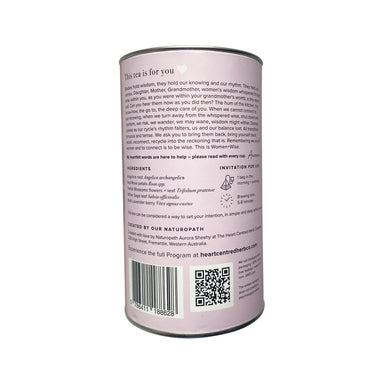
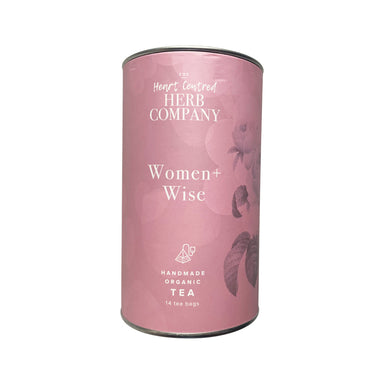
Bodies hold wisdom, they hold our knowing and our rhythm. They hold our stories. Daughter, Mother, Grandmother, women’s wisdom whispered through t...
View full details

Surrender is not giving up, it is letting go of how we think we should be. Release this overloaded inordinate pressure to perform. You are not som...
View full details

Immune+Instinct will call your strength, call your love of the fight. The fight to live your life, to survive, to thrive. This is a calling within...
View full details

I see you, you kind and weary heart. To the core of you calling, seeking out more light and strength and sense, to begin those path-full steps, I ...
View full details

You are all full up, all of it is too much. The expectation, the workload, the experience, the feelings, this world of yours, is too much. Do not ...
View full details
 Sold out
This full leaf variety of certified organic green tea is organically grown in the Hunan province of south central China. Often referred to by its ...
View full details Sold out

 Sold out
Tonics are to tone and uplift, they resource your own inherent strength. They are to restore you. You are a powerful being, a human being, made to...
View full details
 Sold out
The story of pine needles is old, so very old, like the trees that cast and gnarl as they grow, ever more toward the sun, buffeted by the harsh, ha...
View full details
 Sold out
Sleep is the other form of consciousness, the deeper knowing, the other shore. We so need rest, the balm of sleep. How long has it been, since you...
View full details
 Sold out
Mistletoe so ancient, so able to soothe lungs, coughs and nerves, sheprotects and calms. Licorice breaks down mucus, she nourishes linings of the n...
View full details
 Sold out
Contains:Pine needle + Pure 14 teabagsImmune + Instinct 14 teabagsAntioxidant + Alliance 14 teabags
 Sold out
We have carefully blended yerba maté with hibiscus, cinnamon and mint, offering an uplifting blend perfect for inclusion in your morning routine. ...
View full details Sold out
Yerba Maté offers an uplifting quality with a vegetal, earthy and slightly toasty flavour. Yerba Maté is an organic, green variety of yerba Maté l...
View full details Sold out
Loose leaf tea can easily be brewed at home, at work or on the go. This easy to use single serve tea strainer is perfect for brewing tea in a mug....
View full details Sold out
We have carefully blended yerba maté with hibiscus, cinnamon and mint, offering an uplifting blend perfect for inclusion in your morning routine. Y...
View full details Sold out
This snow bud organic white tea is directly sourced from a growing cooperative in the Fujian province of China. It is a blend of buds and only the...
View full details Sold out
This is a botanical blend of white tea, delicate flowers and naturally sweet goji berries. Individually hand gathered, white tea is the new young ...
View full details